Global Indices API: Track Global Trends

Traders rely on timely and accurate information to make informed decisions, maximize profits, and mitigate risks. The Global Indices API offers a powerful solution for obtaining real-time global indices data, allowing traders to track major financial markets and adjust their strategies accordingly.
How to Use the Global Indices API
Using the Global Indices API is straightforward, and it provides instant access to critical market information. To get started, traders and developers can integrate the API into their systems by following the documentation provided by the service provider. This typically involves obtaining an API key, making requests to the endpoint for specific indices, and handling the data returned in the response.
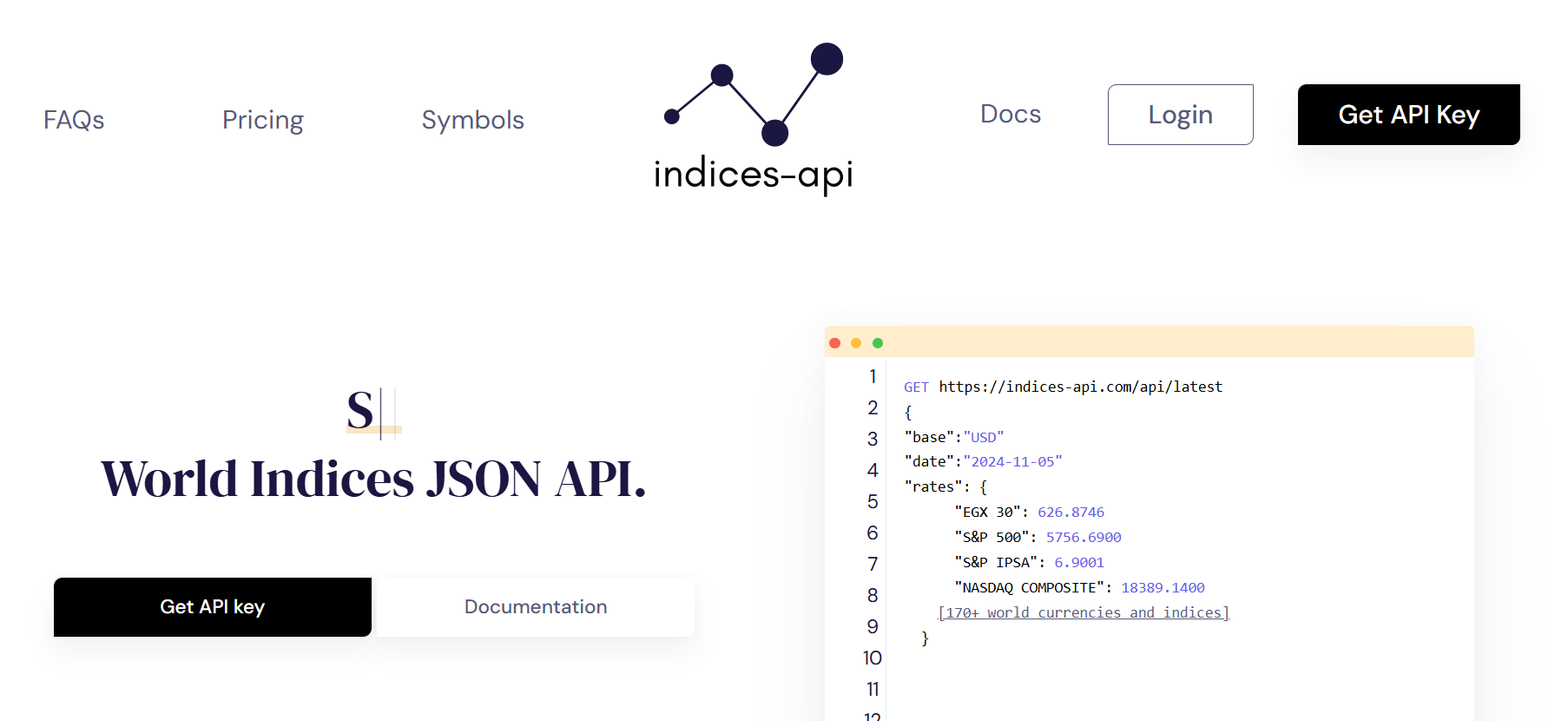
The API covers a wide range of global indices, including major stock market indices like the S&P 500, Dow Jones, FTSE 100, and Nikkei 225, among others. By integrating this API into trading platforms, market analysis tools, or personal dashboards, users can receive real-time updates on the performance of these indices. The data is delivered in an easy-to-understand format, allowing traders to monitor global trends and make timely adjustments to their strategies.
The Importance of Real-Time Market Data
For traders, having access to real-time market data is not just a luxury—it's a necessity. Market conditions can change rapidly, and the ability to react quickly can make a significant difference in profitability. The Global Indices API ensures that traders always have up-to-date information at their fingertips, enabling them to track market trends as they unfold.
In trading, timing is everything. A slight delay in market data can lead to missed opportunities or potential losses. With the Global Indices API, you can monitor the fluctuations of major indices in real-time, providing you with accurate insights into market movements. This empowers traders to make decisions based on the most current information, reducing the risks associated with outdated or lagging data.
Benefits of the Global Indices API for Traders
The Global Indices API offers a host of benefits that enhance trading strategies and decision-making processes. Some of the key advantages include:

1. Comprehensive Market Coverage
The API gives access to a broad range of global market indices, covering all major regions, including the US, Europe, and Asia. Whether you're interested in the performance of a specific sector, country, or a major global index, this API has you covered.
2. Real-Time Data Access
With real-time updates, traders can respond quickly to market changes. The Global Indices API delivers timely and accurate data, helping traders adjust their positions in response to market conditions as they evolve.
3. Enhanced Trading Strategies
Armed with real-time data from the Global Indices API, traders can build more sophisticated and responsive trading strategies. By tracking trends in global indices, traders can anticipate potential market shifts and make better-informed decisions.
4. Ease of Integration
The API is designed to be easy to integrate into existing trading systems, tools, and platforms. With comprehensive documentation and support, users can quickly incorporate it into their workflow without unnecessary complexity.
5. Accurate and Reliable Data
The accuracy and reliability of the data provided by the Global Indices API are essential for effective trading. Traders can trust that the information they receive is up-to-date and reflects the latest market trends, ensuring more precise decision-making.
How the Global Indices API Enhances Trading Strategies
Trading strategies are only as effective as the data they are based on. The Global Indices API plays a vital role in helping traders refine their strategies by providing access to accurate and timely market data. Here are a few ways the API can enhance trading strategies:
Trend Analysis: Traders can use the real-time data from the Global Indices API to perform trend analysis, identifying upward or downward movements in various markets. This allows them to position their trades more strategically.
Market Sentiment: Monitoring the movement of global indices helps traders gauge overall market sentiment. A strong performance from major indices often signals optimism, while poor performance can indicate a bearish market. Traders can use this sentiment to make decisions about when to enter or exit trades.
Risk Management: By tracking global market trends, traders can better manage their risk exposure. For instance, if a major index is showing signs of volatility, traders can adjust their positions or reduce their exposure to minimize potential losses.
Increased Accuracy in Forecasting: Access to real-time data allows traders to create more accurate market forecasts. By examining the performance of global indices, traders can predict market movements more effectively and align their trades with broader market trends.
Conclusion
In the world of trading, access to real-time market data is essential for staying competitive and maximizing potential profits. The Global Indices API provides traders with instant access to global market trends, enabling them to make more informed decisions, refine their strategies, and reduce the risks associated with outdated information. By integrating this powerful tool into their workflow, traders can enhance their ability to respond to market changes and improve their overall trading performance.