DAX Index API: Trading Efficiency in German Markets
The DAX Index API is a powerful tool designed specifically for traders in the German market. By providing accurate, up-to-the-minute data on the DAX Index, this API ensures that traders can access precise information to guide their trading decisions. Whether you're looking to track market movements, analyze trends, or execute trades in real-time, the DAX Index API is an invaluable asset for enhancing trading efficiency.
How to Use the DAX Index API for Optimal Trading
The DAX Index API allows users to easily integrate real-time market data into their trading systems or analysis platforms. Here's a step-by-step guide on how to use it:
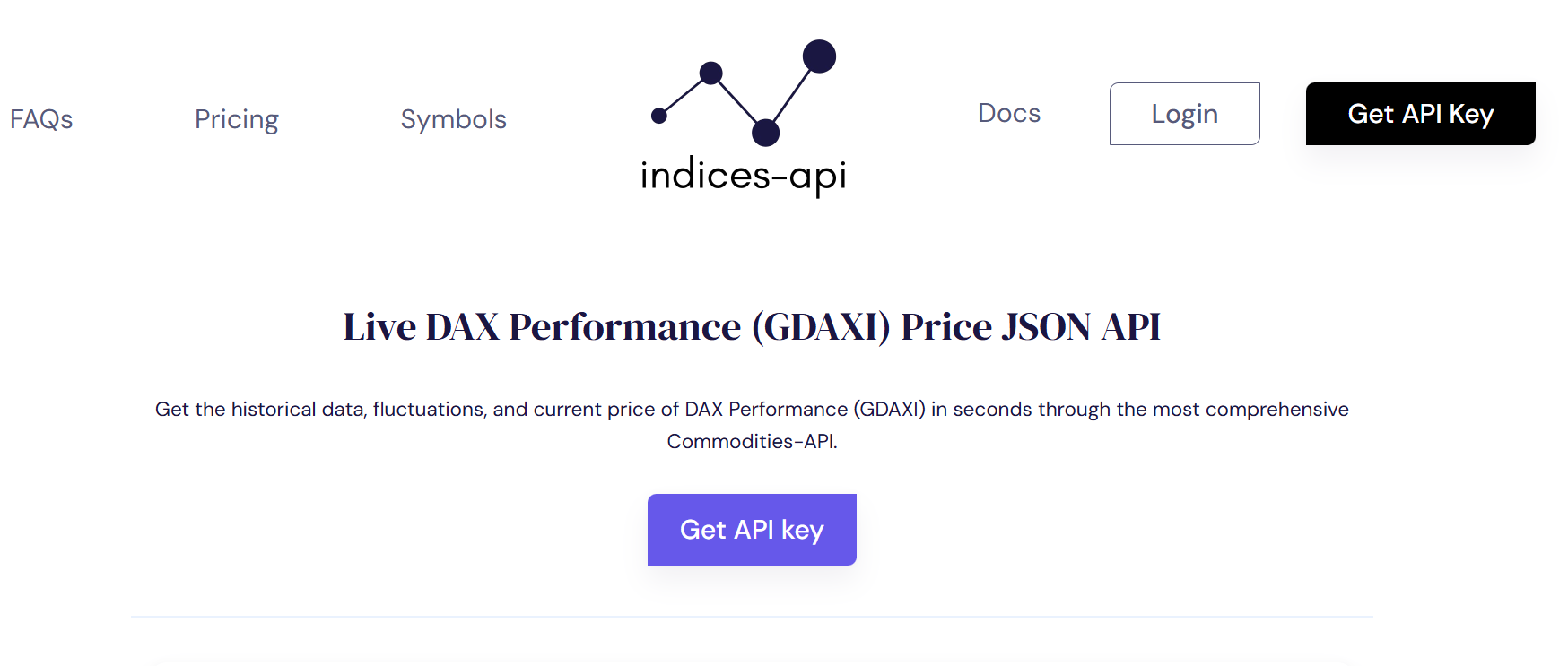
Sign Up and Access API Key: The first step in using the DAX Index API is to sign up for an account with the service provider. After registration, you will receive an API key, which is required for authentication when making requests.
Integrate API into Trading Platform: Once you have your API key, integrate the DAX Index API into your trading software or platform. This typically involves entering your API key into the settings of your system and configuring it to fetch real-time data from the DAX index.
Real-Time Data Feeds: After integration, the API will begin sending real-time data, including the latest DAX index values, historical trends, and market insights. You can use this data to make real-time trading decisions, analyze price movements, and adjust strategies as needed.
Customize Alerts and Notifications: Many DAX Index API providers offer customization options, such as setting up alerts when certain thresholds are met or when significant market movements occur. This feature helps traders stay updated without constantly monitoring the market.
Track DAX Performance: The API also allows for deeper analysis by tracking the historical performance of the DAX Index. This data can be used to identify patterns, assess risk, and develop predictive models for future market movements.
By following these steps, traders can leverage the full capabilities of the DAX Index API, ensuring they are always one step ahead in the market.
Why Real-Time Market Data Matters for Traders
The key to successful trading lies in having access to accurate, timely information. In the context of the German market, where the DAX Index serves as a benchmark for the performance of the 30 major German companies, real-time data is particularly critical. Traders rely on this data to evaluate market conditions, spot opportunities, and react to market changes swiftly.
For instance, a sudden shift in the DAX Index can signal an opportunity to buy or sell, depending on the trader’s strategy. Without real-time data, traders would be left guessing or reacting to outdated information, which could lead to missed opportunities or costly mistakes.
Furthermore, the DAX Index API offers traders seamless access to this data, which is updated at frequent intervals throughout the trading day. This means that traders don’t have to rely on delayed reports or third-party services that might introduce lag. Instead, they can rely on the DAX Index API to stay ahead of market fluctuations and adjust their positions in real time.
The Benefits of the DAX Index API for Enhanced Trading Strategies
Using the DAX Index API brings several benefits that can help improve the overall effectiveness of trading strategies:
1. Accuracy and Precision
One of the most significant advantages of the DAX Index API is its ability to provide accurate and reliable data. Traders can use this data to fine-tune their strategies, make informed predictions, and execute orders with confidence. Whether you are using technical analysis, fundamental analysis, or a combination of both, the precision offered by the DAX Index API ensures your decisions are based on up-to-date and trustworthy information.
2. Speed and Efficiency
In the financial markets, speed is crucial. The DAX Index API ensures that traders receive real-time data with minimal delay, which is essential for executing time-sensitive trades. By eliminating the need for manual data gathering or waiting for external reports, traders can make quicker decisions, leading to improved efficiency and more profitable outcomes.
3. Customization and Flexibility
The DAX Index API is highly customizable, which means that traders can tailor it to their unique needs. Whether you want to track specific market movements, set up custom alerts, or integrate the data into advanced trading algorithms, the API provides the flexibility to meet various trading styles and strategies.
4. Comprehensive Market Coverage
The DAX Index API offers comprehensive market data, not only for the DAX index but also for related indices and financial instruments. This allows traders to get a complete view of the market, identify correlations between different assets, and refine their trading strategies accordingly.
How the DAX Index API Enhances Trading Efficiency in German Markets
The German stock market is one of the most influential in Europe, and the DAX Index is a key barometer of economic health in the region. With the DAX Index API, traders can make smarter decisions based on real-time updates about the index’s performance. This enhanced access to critical data empowers traders to maximize profits, minimize risks, and improve overall market efficiency.
Traders in the German market will benefit from the DAX Index API’s ability to provide instant access to accurate information, as well as its flexibility to integrate seamlessly with their existing trading platforms. The ability to receive and act on real-time data gives traders a competitive edge, particularly in a market as dynamic as Germany’s.
Conclusion
In conclusion, the DAX Index API is an essential tool for traders looking to optimize their strategies in the German market. By offering real-time data, accuracy, and customization options, it ensures that traders have everything they need to stay ahead in the market. Whether you're an experienced trader or a beginner, integrating the DAX Index API into your workflow can significantly enhance your trading efficiency and profitability.